
 The South African CPL Advantage: Affordable Excellence for Indian Pilots
South Africa, a premier ICAO contracting state, is one of the most practical and cost-effective destinations for Indian students aspiring to earn their CPL. It is renowned for its excellent flying weather and a straightforward license conversion path back to India.
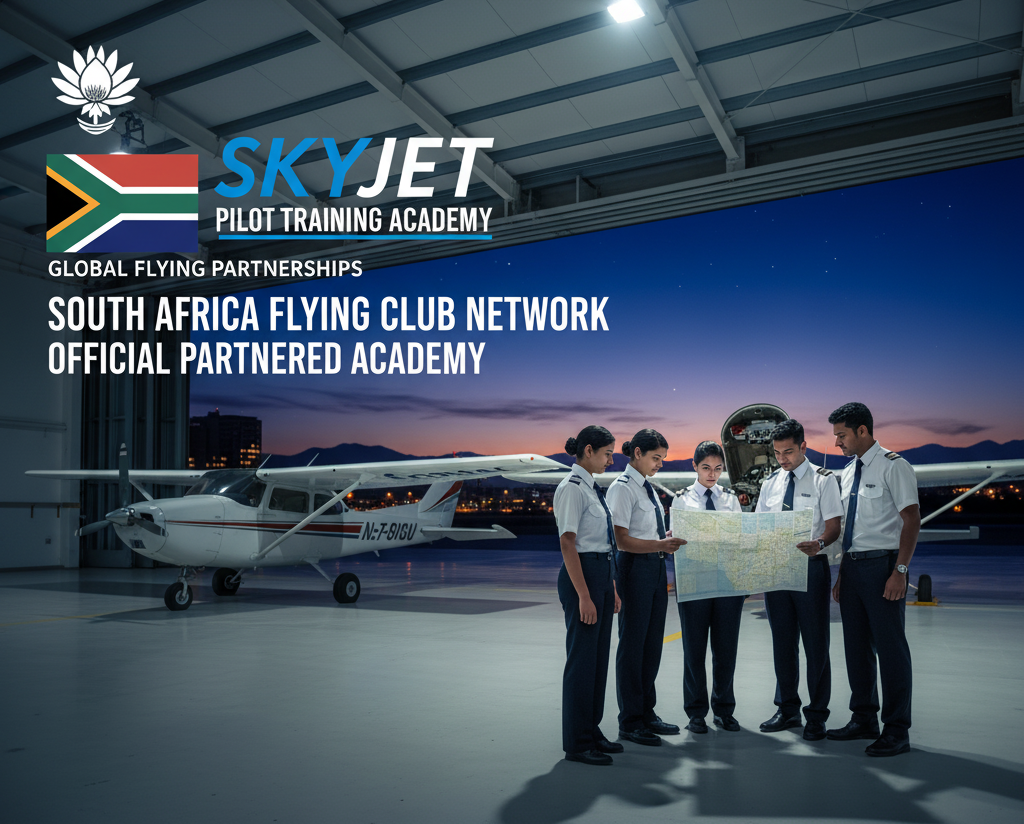
South Africa is an exceptionally popular and cost-effective destination for aspiring pilots, particularly those from India, seeking Commercial Pilot License (CPL) training. Academies and flying clubs across the nation, especially near Johannesburg and Cape Town, benefit from ideal flying weather—offering over 300 sunny days per year that allow for highly efficient and faster course completion (often within 12–15 months). The training is delivered under the strict supervision of the South African Civil Aviation Authority (SACAA), an ICAO-compliant body, ensuring the license is globally recognized and readily convertible to an Indian DGCA license. Furthermore, South Africa’s diverse geography provides critical, varied experience, exposing students to controlled, uncontrolled, coastal, and mountainous airspaces, ultimately developing highly adaptable and proficient aviators at a significantly lower overall cost compared to many Western training hubs.
Key Advantages of CPL Training in South Africa
1. Superior Cost-Effectiveness
South Africa consistently offers one of the lowest total training costs globally, especially when comparing the full CPL with Instrument and Multi-Engine Ratings.
- Training Fees: The CPL program cost in South Africa typically ranges from ₹30 Lakh to ₹40 Lakh (approx. $35,000 to $45,000 USD), which is significantly lower than in the USA, Canada, or even India (where costs can reach ₹50–₹60 Lakh due to slower completion).
- Cost of Living: The cost of accommodation, food, and daily expenses is relatively low, which further reduces the financial pressure on international students.
2. Fastest Course Completion
The ability to finish your 200 flying hours quickly is perhaps the single biggest advantage of training in South Africa.
- Favorable Weather: The country, particularly the central regions like Gauteng, boasts an average of 300+ flyable days per year. This stable, clear weather minimizes cancellations and delays.
- Efficiency: Students can often complete the required 200 flying hours in just 10 to 15 months, compared to the 18–24 months or more commonly seen in India or other regions with unpredictable weather.
- Less Congested Airspace: Many flying schools operate in airfields or airspaces that are less congested than major international hubs, leading to less time waiting on the ground and more time logged in the air.
3. Globally Recognized & High-Quality Training
The quality of training is high and meets international standards, which is crucial for your career.
- ICAO Compliance: The South African Civil Aviation Authority (SACAA) is a highly respected ICAO (International Civil Aviation Organization) member state. This means the SACAA CPL you earn is globally recognized and accepted by the Indian DGCA for license conversion.
- Diverse Flying Experience: The country’s varied geography (coastal, mountainous, controlled, and uncontrolled airspace) provides exposure to different flying conditions, creating a more well-rounded and adaptable pilot.
- English Language: English is the primary language of aviation and is widely spoken in South Africa, eliminating a common barrier faced in non-English-speaking training destinations.
- Easy RTR Conversion: As a Commonwealth nation, the conversion of your South African Radio Telephony Operator’s License (RTR) to the Indian equivalent is generally a more streamlined process.
Step-by-Step Guide: CPL via SkyJet (India) to South Africa (Flying)
This process is divided into three logical phases: Pre-Departure (in India, guided by SkyJet), Flight Training (in South Africa), and Post-Training (Back in India for conversion).
Phase I: Pre-Departure Preparation (SkyJet Academy, India)
This phase focuses on the DGCA prerequisites that are often time-consuming and best completed before you start flying.
| Step | Action by Student | Role of SkyJet Academy (Typical) |
| 1. Eligibility & Medical | Confirm 10+2 with Physics & Math. | Guidance: Provides a checklist for eligibility and documents. |
| Obtain DGCA Class 2 Medical (Initial). | Assistance: Directs you to DGCA-approved medical examiners. | |
| Apply for and obtain DGCA Class 1 Medical. | Assistance: Follows up on your Class 1 PMR (Permanent Medical Register) number. | |
| 2. Computer Number | Apply for your unique DGCA Computer Number via the eGCA portal. | Documentation Support: Assists with the application process, ensuring all documents (like Board Verification Certificates) are correct. |
| 3. DGCA Ground Exams | Enroll in SkyJet’s DGCA CPL Ground Classes. | Core Service: Conducts comprehensive classes for the mandatory DGCA subjects: Air Regulations, Aviation Meteorology, and Air Navigation (Composite Paper). |
| Pass the DGCA written exams. | Training: Provides structured study material, mock tests, and faculty support for high passing rates. | |
| 4. Flight School Admission | Select a partner SACAA-approved flight school in South Africa (e.g., Johannesburg, Cape Town). | Partnership/Placement: Acts as a consultant to secure your admission and Letter of Acceptance (LOA) with their South African partner school. |
| 5. Visa & Travel | Apply for a South African Student Visa at the Consulate/Embassy. | Visa Support: Provides the necessary documentation, like the Letter of Acceptance and proof of medical insurance/financial security, required for your visa application. |
Phase II: Flight Training (SACAA CPL in South Africa)
This phase involves the physical move to South Africa and the actual flying hours.
| Step | Action by Student | SACAA CPL Requirements | Duration (Approx.) |
| 6. SACAA Medical | Immediately schedule and pass the SACAA Class 1 Medical Exam upon arrival. | Mandatory for Student Pilot License (SPL). | 1 Week |
| 7. Private Pilot License (PPL) | Complete foundational flight training and ground school for PPL. | 45 hours minimum flying time. | 3–6 Months |
| 8. Ratings & Hour Building | Fly the required total hours and complete ratings. | 200 hours total flying time, including: 100 hours Pilot-in-Command (PIC). Night Rating (NR) (5 hours night flying). Multi-Engine Rating (MER). Instrument Rating (IR) (40 hours instrument time). | 8–12 Months |
| 9. Final Checkride | Pass the final SACAA CPL/IR practical flight test with the Designated Flight Examiner. | Successful completion leads to the issuance of your SACAA Commercial Pilot License with IR and MER. | Final Month |
Phase III: DGCA License Conversion (Back in India)
Once you return, you must convert the foreign license to an Indian license to be legally employed as a pilot in India.
| Step | Action by Student | Purpose of Conversion Flying | Duration (Approx.) |
| 10. Document Collection | Get the Verification of Authenticity Letter for your SACAA CPL sent directly from SACAA to DGCA. | This is the most critical document to validate your foreign license. | 1-2 Months |
| 11. Conversion Flying | Enroll at an Indian FTO (or a partner FTO of SkyJet) to complete mandatory Indian flying tests. | To demonstrate competency to DGCA standards on Indian-registered aircraft. | 2-4 Weeks |
| Complete the mandatory DGCA check-rides: General Flying Test (Day/Night), Cross-Country Tests (Day/Night), and the Instrument Rating (IR) Test. | These are the final skill tests required by Indian regulations. | ||
| 12. Final Submission | Submit all documents (verified logbook, medicals, exam passes, skill test reports) to the DGCA via the eGCA portal. | Final Issuance of Indian CPL. | 2-4 Weeks |
Note: Since SkyJet Pilot Training Academy primarily operates in India, always confirm the specifics of their South Africa partnership, including the partnered flight school’s name, fleet, and the exact total cost of the program.